
Body & skin
Understanding Your Skin Type: The Fitzpatrick Scale
What the six Fitzpatrick skin types describe, how your type affects sunburn and pigment risk, and why it shapes plans for peels, laser and microneedling.
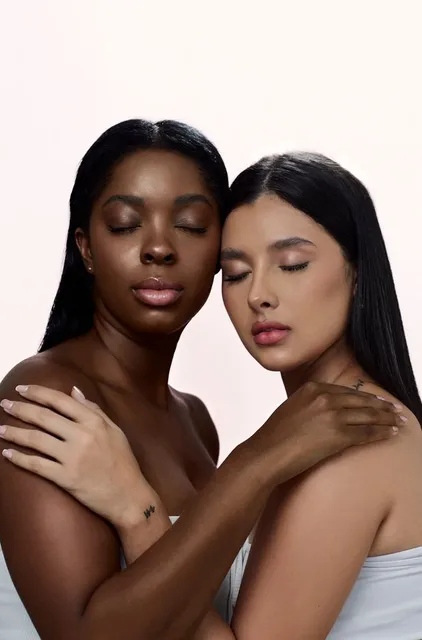
The Fitzpatrick scale is a six-point system that describes how your skin reacts to sun: how easily it burns and how readily it tans. Providers use it to estimate your risk of sunburn, skin cancer and pigment changes, and to plan treatments such as chemical peels, laser and microneedling more safely. It is a helpful starting point, not a complete description of your skin.
Where the scale comes from
The scale was developed in the 1970s by dermatologist Thomas Fitzpatrick, originally to help choose safe doses of light therapy. It has since become a common shorthand in dermatology and aesthetic medicine. It is based mainly on your answers about burning and tanning, with your natural skin, hair and eye colour as supporting clues.
The six types
- Type I: very fair skin that always burns and never tans. Often red or light blonde hair, freckles and light eyes.
- Type II: fair skin that usually burns and tans minimally.
- Type III: light to medium skin that sometimes burns and tans gradually to a light brown.
- Type IV: medium or olive skin that rarely burns and tans easily.
- Type V: brown skin that very rarely burns and tans readily.
- Type VI: deeply pigmented dark brown to black skin that almost never burns.
Your type refers to your natural, untanned skin, usually judged on an area that is not often exposed to the sun, such as the inner arm or buttocks. Many people fall between two types, and your provider may describe you as, for example, a type III to IV.
Burn risk and skin cancer
Lower Fitzpatrick types (I and II) have less natural melanin protection, burn more easily and have a higher lifetime risk of skin cancers, including melanoma. People with these types benefit greatly from daily sunscreen, protective clothing and regular skin checks.
Higher types (V and VI) have more built-in protection against burning, but they are not immune to sun damage or skin cancer. When skin cancer does occur in deeper skin tones, it is sometimes found later, and it more often appears in less sun-exposed areas such as the palms, soles and nails. Everyone benefits from broad-spectrum sun protection, though the reasons and priorities differ.
Pigment risk: the other side of the scale
While lower types worry more about burning, higher types are more prone to pigment problems. Skin with more active pigment cells is more likely to darken after inflammation or injury. This is called post-inflammatory hyperpigmentation, and it can follow acne, eczema, insect bites, or a cosmetic treatment that irritates the skin. Melasma is also more common in types III to V. For more, see hyperpigmentation care and treatment.
Light-coloured patches, known as hypopigmentation, can occur too, particularly after aggressive treatments on deeper skin. These can be slow to recover and are sometimes lasting.
How skin type shapes treatment plans
Your Fitzpatrick type is one of the first things an aesthetic provider considers, because it affects which treatments are suitable and how they should be done.
Laser and light treatments
Lasers target pigment, water or blood in the skin. In deeper skin, the melanin in the outer layer can absorb energy meant for the target, increasing the risk of burns and pigment change. Some wavelengths, such as Nd:YAG, are generally considered more suitable for darker skin, and settings are adjusted carefully. Laser hair removal is a good example; see laser hair removal and skin types.
Chemical peels
Superficial peels are used across all skin types, but deeper peels carry a greater risk of pigment change in types IV to VI. Preparing the skin beforehand and choosing gentler acids can reduce, but not remove, that risk.
Microneedling
Microneedling does not rely on light, so it is often considered an option for a wide range of skin types. Even so, inflammation from treatment can trigger temporary darkening in some people, and needle depth and aftercare are adjusted accordingly.
A test spot is commonly used before a full laser or peel treatment, particularly in higher Fitzpatrick types or when it is unclear how skin will respond.
Limits of the scale
The Fitzpatrick scale has real limitations. It was built around burning and tanning, which does not capture the full range of skin colours and responses. Self-reporting can be unreliable, and people of the same type can react quite differently. Ethnic background, skin thickness, sensitivity, current tan, medications and medical history all matter as well.
For these reasons, providers use the scale alongside a careful history and examination rather than as a rule on its own. Recent tanning or sun exposure, for example, can change how a treatment should be planned even if your natural type has not changed.
Who should take extra care before treatment
Regardless of type, some situations call for postponing or adjusting peels, laser and microneedling. These include a recent tan or sunburn, pregnancy, active infection or cold sores, recent isotretinoin use, photosensitising medications, a history of keloids or poor healing, and untreated melasma. Tell your provider about all medications and skin conditions. The main risks across these treatments include redness, swelling, burns, infection, pigment change and, less commonly, scarring.
Frequently asked questions
Can my Fitzpatrick type change?
Your natural type does not change with a tan, though your skin's current state does, and that matters for treatment timing. Some people find their type was misjudged when they answered quickly, so a provider may reassess it.
Does my type tell me which skincare to buy?
Not directly. Fitzpatrick type mainly describes sun response. Whether your skin is oily, dry, sensitive or acne-prone is a separate question that guides product choice.
Are deeper skin types unable to have laser?
No. Many laser treatments can be done in deeper skin with suitable devices, settings and precautions, though some procedures carry higher risk and may not be recommended.
Knowing your skin
Understanding your Fitzpatrick type helps you make sense of your sun protection needs and why treatment plans differ between people. If you are considering a peel, laser or microneedling, HealthPark Medical Aesthetics can assess your skin type and history and explain which options, if any, suit you, at a consultation.
Keep reading

Body & skin
What Happens at a Skin Consultation
What to expect at a skin consultation: medical and skincare history, skin examination, setting priorities, discussing options including no treatment, and fees.
Read article
Body & skin
Mixing Skincare Actives: Which Combinations Irritate
Which skincare actives clash, such as retinoids with strong acids, how to split actives between morning and night, and how to layer without harming the barrier.
Read article
Body & skin
Microneedling for Acne Scars: What to Expect
Which acne scar types tend to respond to microneedling, the usual treatment series, combining it with other methods, and why improvement builds over months.
Read article