
How many Grafts do I need?
Free 30-minute consultationNo obligationFees reviewed in writing first
- Physician-Led Care
- CPSNS-Licensed Physician
- 15+ Years in Medical Practice
- Fees Reviewed in Writing
- Sydney, Cape Breton
Hair Loss Classification
Hair loss is a progressive condition influenced by various factors like age, ethnicity, genetics, and medical conditions.
Planning for this inevitability throughout a patient's lifetime is crucial. This page aims to assist in estimating the required number of grafts for a hair transplant based on the patient's Norwood Class pattern of hair loss.
The Norwood Classification system delineates different classes of hair loss, serving as a general guideline for determining the number of follicular unit grafts needed in a first hair transplant procedure.
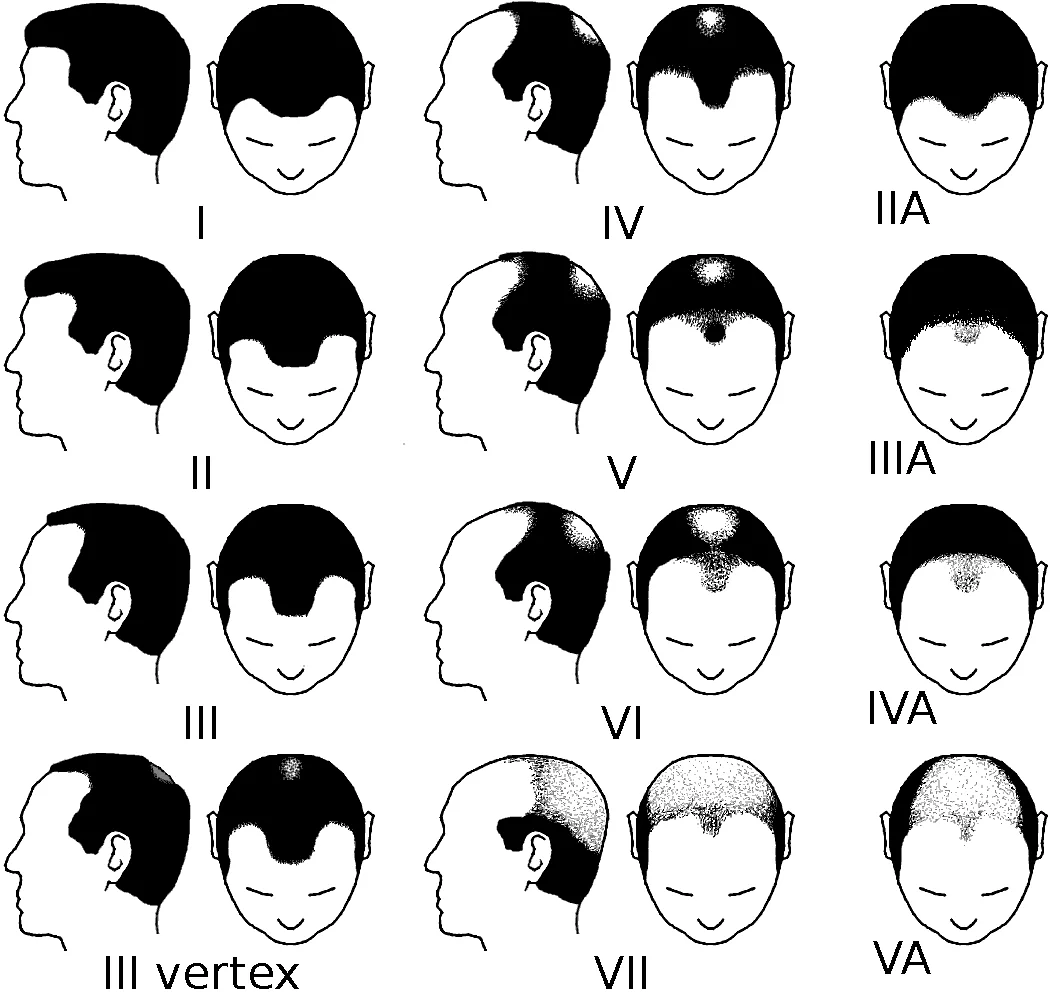
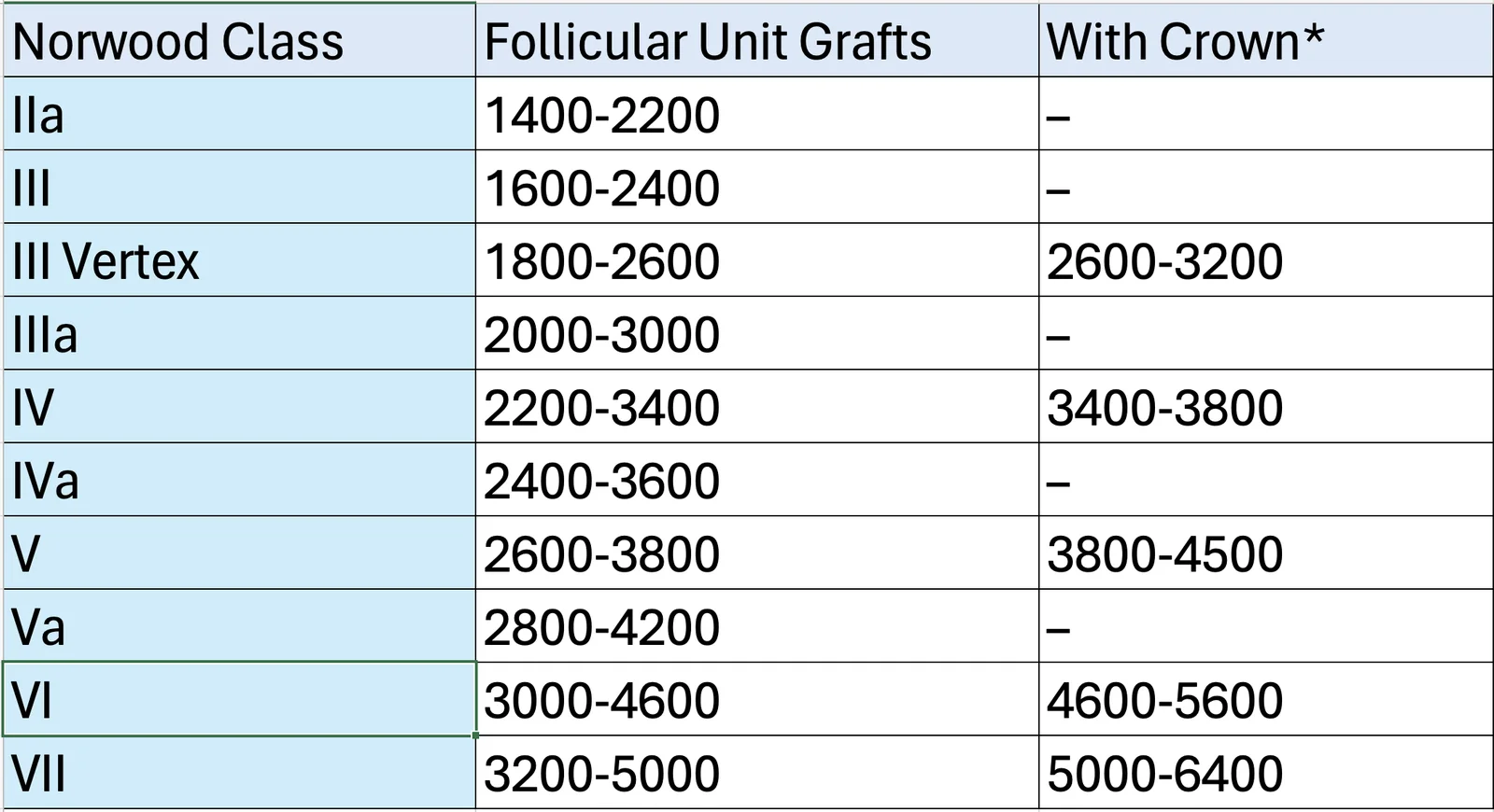
Number of grafts in first transplant session
In the initial hair transplant session, several key objectives should be met:
- Establishing or enhancing the frontal hairline to frame the face permanently.
- Providing coverage to thinning or bald areas, extending at least to the vertex transition point.
- Achieving sufficient density for natural-looking results, ensuring the procedure stands alone.
- It's crucial to transplant the entire area needing coverage in the first session to expedite surgical restoration. Avoid dividing the process into sections or small sessions arbitrarily. While additional sessions may be needed in the future for fuller results or addressing future hair loss, it's essential to maximize outcomes in each session.
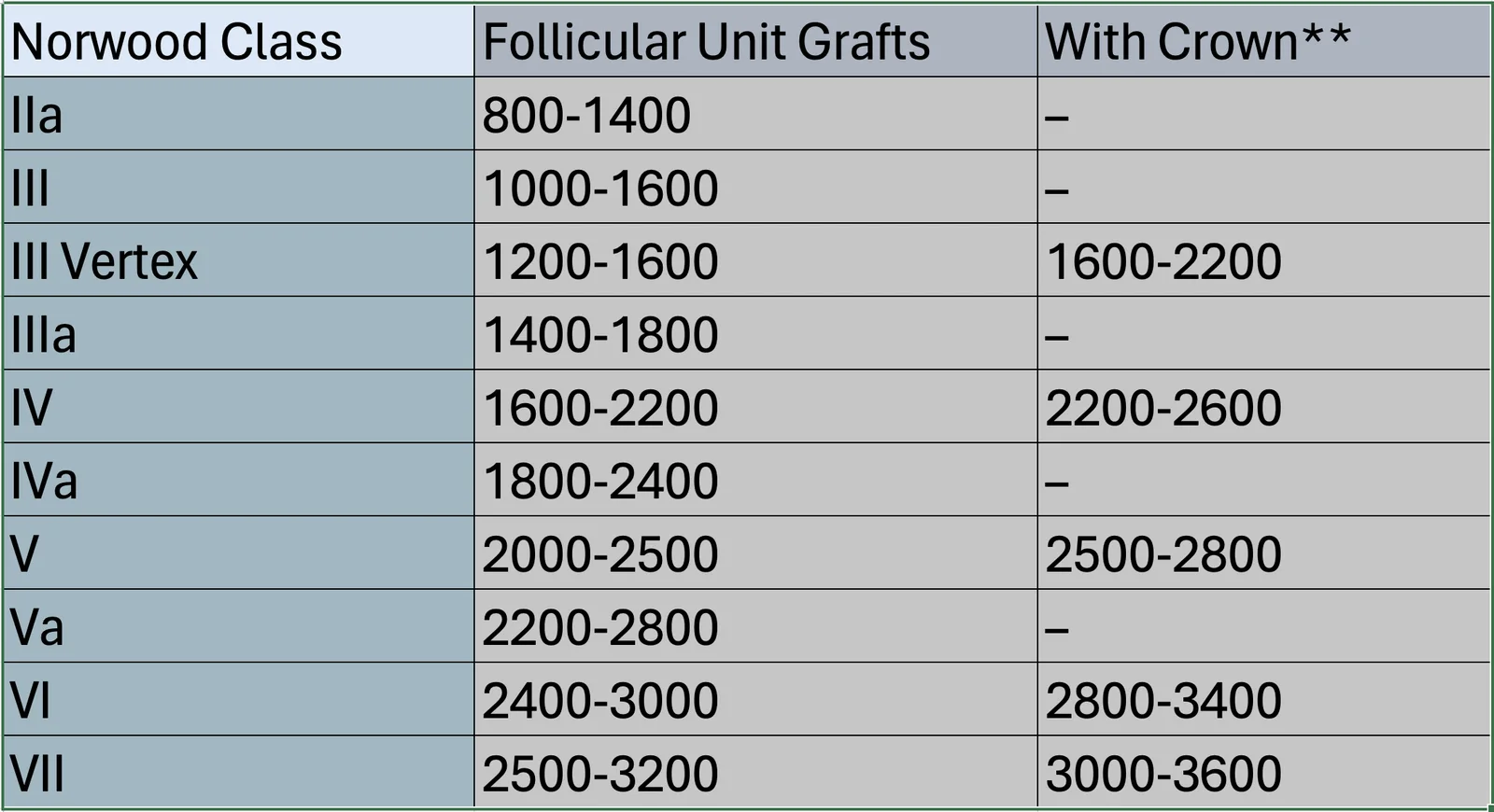
Total Number of Grafts for the Hair Restoration
The full results of a follicular unit hair transplant typically emerge within 10 to 12 months.
Consideration for a second session should only occur after the hair from the initial session has fully grown in.
Throughout the first year, changes in hair diameter, texture, and length can significantly impact the appearance of the restoration, affecting grooming preferences. Thus, decisions regarding additional graft placement should be made once the hair reaches styling length, allowing for optimal aesthetic judgments by both patient and physician.
Delaying a second session also allows for continued improvement in scalp laxity, making donor hair extraction easier.
Goals for the second transplant may involve increasing density in previously treated areas, refining the hairline further, addressing additional hair loss, and providing crown coverage if necessary.
What Our Patients Say
“Always a wonderful experience visiting Dr. Puppala. Booking is easy, staff are friendly, and they explain everything in depth. Professional, knowledgeable, and fun!”
N.B. · Google review
“The staff is so kind and the doctor explained everything. I had several treatments and loved them all. Highly recommend.”
C.E. · Google review
“I’ve had lip filler, Botox, and laser tightening. Always comfortable, always great results. Highly recommend!”
J.M. · Google review
Reviews derived from Google and relate to HealthPark Medical Aesthetics generally, not to any specific treatment. Names have been initialised to protect patient privacy. Individual results vary and are not guaranteed.
Start With a Complimentary Consultation
Thirty minutes, no obligation, and a clear, honest plan — with benefits, risks, costs and alternatives explained, so you can decide with confidence.
45 Weatherbee Rd, Suite 404A, Sydney, NS B1M 0A1 · Mon–Fri, 10 a.m.–5 p.m. · drpuppala@healthparkbotox.com
Results vary from person to person, and not every treatment is suitable for everyone. Cosmetic treatments are not insured by MSI. Dr. Puppala is not a certified specialist in dermatology or plastic surgery.
© 2026 HealthPark Aesthetics