
Body & skin
Chemical Peels Explained
How chemical peels use acids to exfoliate skin, what they can help with, how often they are done, who should wait, and the main risks to know about.
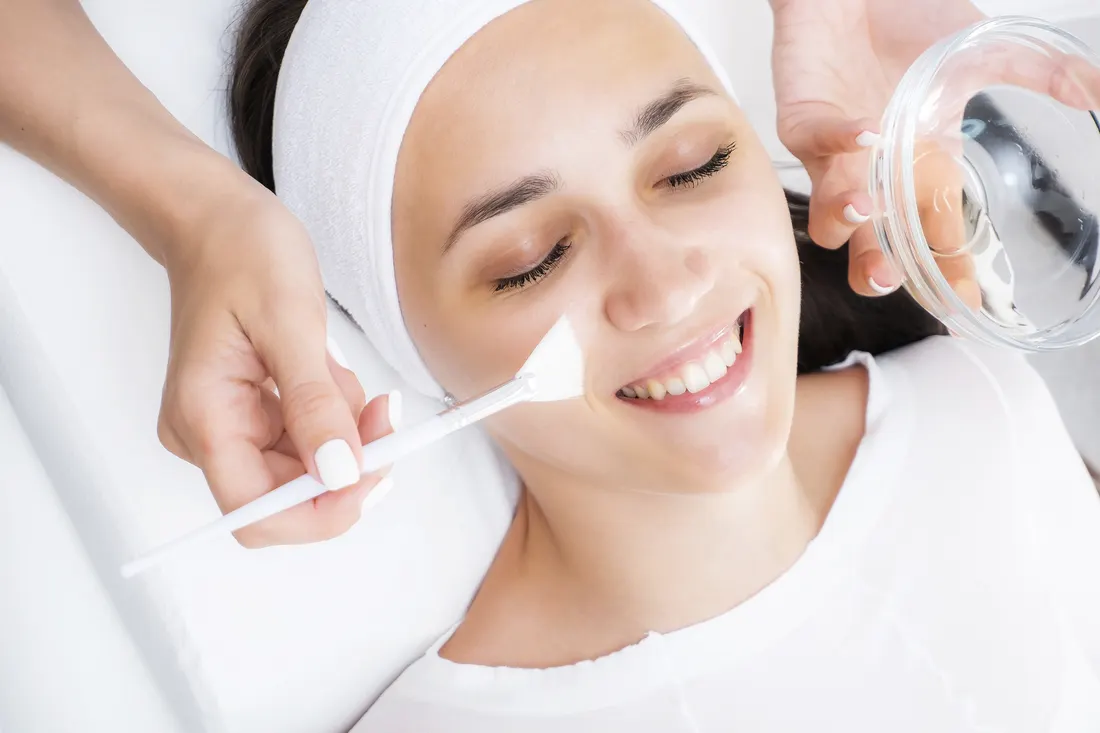
A chemical peel is a controlled application of an acid solution to the skin that loosens and removes dead or damaged surface cells. As the skin sheds and repairs itself, the new surface often looks smoother and more even in tone. Peels range from very gentle to quite strong, and the right one depends on your skin, your goals and how much recovery time you can manage.
How an acid peel actually works
The outermost layer of skin, called the stratum corneum, is made of flattened cells held together by a kind of natural "glue." Normally these cells shed on their own. With age, sun exposure and some skin conditions, that shedding slows down and becomes uneven, which can leave skin looking dull or rough.
Peeling agents weaken the bonds between those surface cells so they release more quickly. Stronger peels go further, causing a controlled injury in the upper layers of skin. The body responds with a healing process that replaces the treated layer and, with deeper peels, encourages some new collagen to form.
How deep a peel reaches depends on the type of acid, its strength, the pH of the solution, how long it stays on, how the skin was prepared and how many layers are applied. This is why two peels with the same acid can behave quite differently.
Common peeling agents
Each of these common ingredients behaves a little differently on the skin.
- Glycolic acid — an alpha hydroxy acid (AHA) from sugar cane. It has small molecules that penetrate readily and is widely used for dullness, fine texture and mild pigment.
- Lactic acid — another AHA, generally considered milder, and often chosen for drier or more sensitive skin.
- Mandelic acid — a larger AHA molecule that penetrates more slowly, which some people tolerate more comfortably.
- Salicylic acid — a beta hydroxy acid (BHA) that dissolves in oil, so it can work inside pores. It is commonly used for oily and acne-prone skin.
- Trichloroacetic acid (TCA) — used at a range of strengths, from superficial to medium depth. Stronger TCA peels are a medical procedure with real recovery time.
- Jessner's solution — a combination of salicylic acid, lactic acid and resorcinol, sometimes used alone or layered before TCA.
Very deep peels, such as phenol peels, are a separate category with significant risks, including effects on the heart during treatment. They are not part of routine aesthetic care.
What peels can and cannot help with
Peels are mainly a surface treatment. They tend to be most useful for concerns that live in the upper layers of skin:
- Dull, uneven or rough texture
- Mild to moderate sun damage and freckling
- Some types of hyperpigmentation, including marks left behind after acne
- Clogged pores and some forms of mild to moderate acne
- Fine, shallow lines, particularly with medium-depth peels
Peels do not lift sagging skin, replace lost volume or relax muscle-driven lines such as frown lines. Deep acne scars, deep wrinkles and significant laxity usually need other approaches. If pigmentation is your main concern, our article on hyperpigmentation care and treatment explains why the type of pigment matters so much.
How often peels are done
Frequency depends almost entirely on depth. Light, superficial peels are often done as a series, commonly spaced about two to six weeks apart, because each one has a modest effect. Medium-depth peels involve more recovery and are usually spaced months apart, and many people have only one or two.
More is not better. Peeling too often can damage the skin barrier and lead to ongoing redness, sensitivity or pigment changes. A sensible plan allows the skin to fully recover between sessions and is adjusted based on how your skin responds. For a closer look at the differences between depths, see superficial vs medium-depth peels.
Who should not have a peel, or should wait
A peel is not right for everyone at every time. You may be advised to wait or choose another option if any of the following apply:
- Pregnancy or breastfeeding, particularly for salicylic acid and stronger peels
- Active infection, open sores, or an active cold sore outbreak in the area
- Recent use of oral isotretinoin, since healing can be affected; timing should be discussed with your doctor
- Active eczema, psoriasis or a rosacea flare on the treatment area
- Recent waxing, laser treatment or other procedures on the same skin
- A recent sunburn or a plan for significant sun exposure soon after treatment
- A history of poor wound healing, keloid scarring or certain autoimmune conditions
- An allergy to aspirin, which is relevant for salicylic acid peels
If you have a history of cold sores, let your provider know, because a peel around the mouth can trigger an outbreak and preventive medication may be considered. People with medium to deeper skin tones can have peels, but there is a higher chance of pigment changes, so the choice of acid and strength needs extra care.
Main risks and side effects
Most people with a superficial peel experience mild tingling or stinging during treatment, then some redness, tightness and light flaking for a few days. Medium-depth peels bring more noticeable redness, swelling and peeling that typically lasts about a week.
Less common but important risks include:
- Darkening of the skin (post-inflammatory hyperpigmentation), especially in deeper skin tones or with sun exposure
- Lightening of the skin, more of a concern with deeper peels
- Prolonged redness or sensitivity
- Infection, including reactivation of the cold sore virus
- Scarring, which is rare with superficial peels but possible with deeper ones or if skin is picked
Following aftercare instructions closely, especially sun protection and not picking, reduces many of these risks. Our guide to chemical peel aftercare walks through the first few weeks.
Frequently asked questions
Will my skin visibly peel?
Not always. Very light peels may cause little more than slight flaking, while medium-depth peels usually cause obvious sheets of peeling. Visible peeling is not a sign that a peel "worked"; results come from what happens in the skin, not how dramatic the shedding looks.
Do I need to prepare my skin beforehand?
Sometimes. Your provider may suggest a few weeks of daily sunscreen and, in some cases, specific topical products to help the skin respond more evenly. You will also usually be asked to pause retinoids and exfoliating products for several days before treatment.
Can I wear makeup afterward?
After a light peel, many people can return to gentle makeup within a day or so once any stinging has settled. After a medium-depth peel, it is usually wiser to wait until the skin has finished peeling and healed.
Are peels the same as at-home exfoliating products?
They use some of the same acids, but in-clinic peels are typically stronger, applied under controlled conditions and timed carefully. At-home acid products can be useful for maintenance, but they are not a substitute for a professional assessment of what your skin needs.
Is a chemical peel right for you?
A peel can be a useful part of caring for your skin, but it is most effective alongside daily sun protection and a sensible routine, and it is not the right choice for every concern. Some people are better served by skincare alone, a different treatment, or a visit to their family doctor if a skin condition needs diagnosis. If you would like to talk through whether a peel suits your skin, HealthPark Medical Aesthetics offers consultations where your history, skin type and goals are reviewed before any treatment is recommended.
Keep reading

Body & skin
What Happens at a Skin Consultation
What to expect at a skin consultation: medical and skincare history, skin examination, setting priorities, discussing options including no treatment, and fees.
Read article
Body & skin
Mixing Skincare Actives: Which Combinations Irritate
Which skincare actives clash, such as retinoids with strong acids, how to split actives between morning and night, and how to layer without harming the barrier.
Read article
Body & skin
Microneedling for Acne Scars: What to Expect
Which acne scar types tend to respond to microneedling, the usual treatment series, combining it with other methods, and why improvement builds over months.
Read article