
Body & skin
How Skin Ages, Decade by Decade
A plain-language look at how collagen, facial volume and pigment change from your 20s to your 60s and beyond, and how skin care can sensibly match each stage.
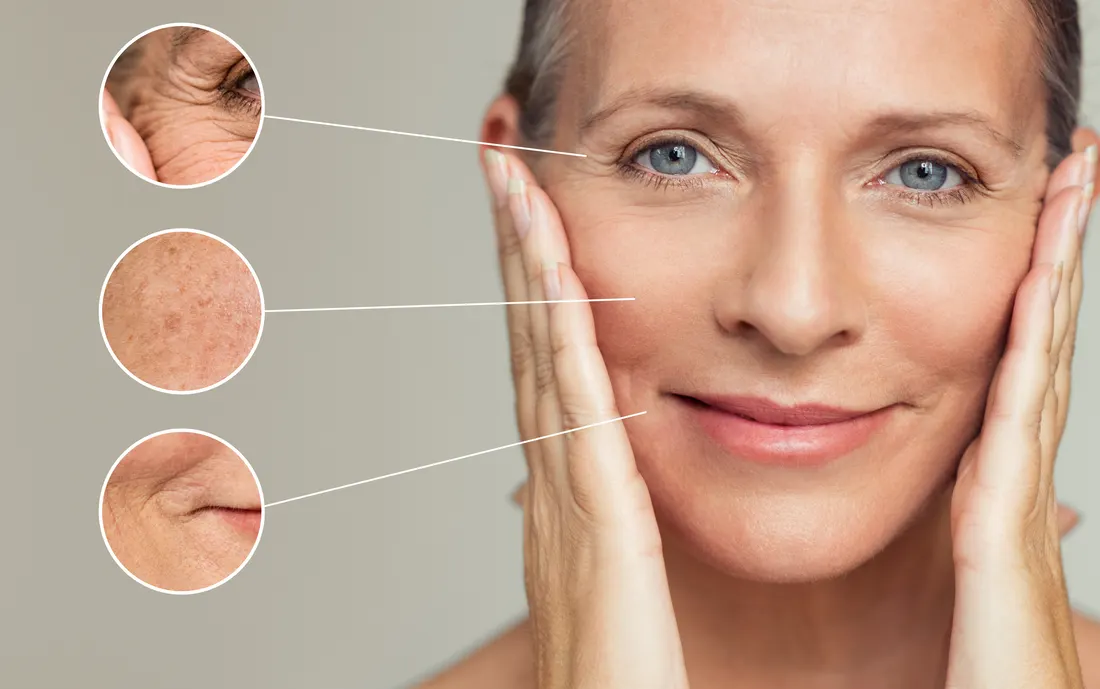
Skin ages through two overlapping processes: the slow, built-in changes that come with time and genetics, and the faster changes driven by sun, smoking and lifestyle. In general, collagen production slows from early adulthood, pigment changes become more visible through the 30s and 40s, and loss of facial fat and bone support becomes more noticeable from the 40s onward. Everyone follows their own timeline, so the decades below are a rough guide rather than a schedule.
Two kinds of ageing
Intrinsic ageing is the part we cannot control. Cells turn over more slowly, the skin makes less collagen and elastin, oil production gradually falls, and the skin becomes thinner and drier. Genetics, skin type and hormones all shape how and when this shows.
Extrinsic ageing comes from outside factors. Ultraviolet (UV) light is the main one, and it is responsible for much of what people think of as "old-looking" skin: brown spots, uneven tone, rough texture and deeper wrinkles. Smoking, poor sleep and pollution also contribute. The encouraging part is that extrinsic ageing is largely preventable.
A useful way to see the difference is to compare skin on your face or hands with skin on a part of your body that rarely sees the sun. The difference is mostly UV exposure.
Your 20s: building habits
For most people, the skin in their 20s is resilient, with good collagen levels and quick healing. Collagen production is thought to begin declining gradually in early adulthood, but visible change is usually small.
The main concerns at this stage are often acne, oiliness and early sun damage that may not show for years. This is the decade where habits matter most:
- Daily broad-spectrum sunscreen, even in Cape Breton's cloudy weather
- A simple routine: gentle cleanser, moisturiser, sunscreen
- Not smoking, and treating acne early to reduce the chance of scarring
Most people in their 20s do not need in-clinic aesthetic treatment. Evidence that early injectables prevent ageing is limited.
Your 30s: the first visible shifts
Many people first notice fine lines around the eyes and on the forehead in their 30s, especially lines that linger after smiling or frowning. Skin may look a little duller because cells shed more slowly. Sun spots and uneven pigment from earlier years can start to surface, and melasma may appear, especially with pregnancy or hormonal changes.
A retinoid at night and a vitamin C serum in the morning are common additions at this stage, alongside sunscreen. For pigment, gentle approaches and patience usually work better than aggressive ones. Some people consider wrinkle-relaxing injections for movement lines, but this is a personal choice, not a requirement.
Your 40s: volume and texture change
The 40s are often when changes beneath the skin become noticeable. Fat pads in the midface begin to thin and shift downward, and the bones of the face slowly remodel. The result can be flatter cheeks, deeper folds from nose to mouth, and a more tired look under the eyes, even when you feel well rested.
Lines that were once only present with expression may now be visible at rest. Pores can look larger, and sun damage often becomes more obvious. For many women, perimenopause brings drier skin.
Options at this stage may include skin-quality treatments such as peels, microneedling or laser, and, for some people, injectables for movement or volume. Because several layers are changing at once, our article on combination treatment plans explains why one treatment rarely addresses everything.
Your 50s: hormones and thinning skin
For women, menopause has a marked effect on skin. Falling estrogen levels are associated with a fairly rapid loss of collagen in the first years after menopause, which shows up as thinner, drier and less elastic skin. Men experience a slower, steadier decline.
Laxity becomes more visible along the jawline and neck. Skin may bruise more easily and heal more slowly. Dryness and sensitivity often mean that products which suited you before now sting or irritate.
Skin care often shifts toward richer moisturisers, gentler cleansers and retinoids used at a tolerable frequency. Treatments that improve skin quality and support can help, but it is important to keep expectations realistic: non-surgical options are most suitable for mild to moderate change, and surgery may be the better route for significant laxity.
Your 60s and beyond: protecting skin health
By this stage, the skin is thinner, more fragile and slower to repair. Wrinkles are deeper and more permanent, and accumulated sun exposure may show as spots, rough patches or broken blood vessels.
This is also the age group where skin cancer becomes more common. Rough, scaly patches that do not heal, new or changing moles, or sores that bleed should be checked by your family doctor or a dermatologist. Medical skin checks come before any cosmetic treatment of a spot.
Gentle care, consistent moisturising, sun protection and treating dryness and itch all support comfort and skin health. Aesthetic treatment remains an option for many people, with settings and plans adjusted for more delicate skin.
What helps at every age
A few things matter across all decades:
- Sun protection is the single most effective step for slowing visible ageing. See our guide to sunscreen year-round in Nova Scotia.
- Not smoking protects collagen and blood supply to the skin.
- Sleep, nutrition and managing conditions such as eczema or acne support the skin's repair.
- Simple, consistent routines usually work better than frequently switching products.
Frequently asked questions
Can I tell my skin's age from my birth year?
Not reliably. Two people of the same age can look very different depending on genetics, sun history and smoking. Your skin, not the calendar, is the better guide.
Is it ever too late to start sunscreen?
No. Daily sun protection reduces further damage and lowers skin cancer risk at any age, and some sun-related changes can improve once the skin is protected.
Do I need aesthetic treatment as I age?
No. Ageing is normal, and many people are content with good skin care alone. Treatment is an option for those who want it, not a necessity.
If you would like to understand which changes are happening in your own skin and what, if anything, makes sense to address, a consultation can help. At HealthPark Medical Aesthetics, that conversation starts with your goals and may simply end with a skincare plan.
Keep reading

Body & skin
What Happens at a Skin Consultation
What to expect at a skin consultation: medical and skincare history, skin examination, setting priorities, discussing options including no treatment, and fees.
Read article
Body & skin
Mixing Skincare Actives: Which Combinations Irritate
Which skincare actives clash, such as retinoids with strong acids, how to split actives between morning and night, and how to layer without harming the barrier.
Read article
Body & skin
Microneedling for Acne Scars: What to Expect
Which acne scar types tend to respond to microneedling, the usual treatment series, combining it with other methods, and why improvement builds over months.
Read article