
Fotona laser
Your First Laser Appointment: Step by Step
What happens at a first laser visit, from health and medication review and skin typing to test spots, eye protection, the treatment itself and follow-up.
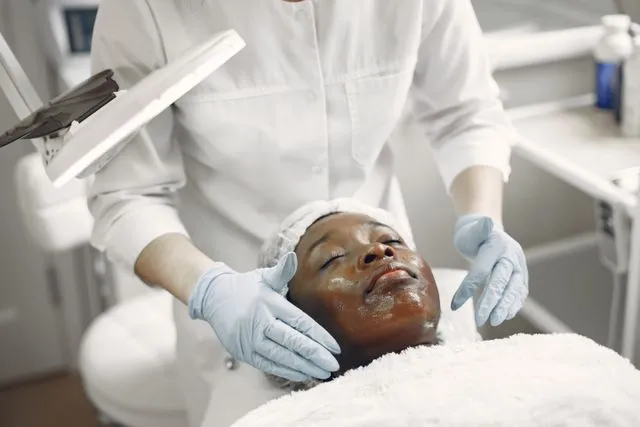
A first laser appointment usually involves more talking and checking than actual laser time. You can expect a review of your health and medications, an assessment of your skin type, often a small test spot, and a clear plan for aftercare and follow-up before any full treatment goes ahead.
Knowing the sequence in advance can make the visit feel calmer. Here is what typically happens, in the order it usually unfolds.
Step 1: Arrival and paperwork
You will be asked to complete or confirm a health questionnaire and a consent form. These are not formalities. Laser light interacts with pigment, blood vessels and water in the skin, and your answers help the clinician choose settings that suit your skin rather than a generic setting.
It helps to arrive with clean skin on the area to be treated: no makeup, lotion, perfume or deodorant there. If you are having hair removal, the area should usually be shaved the day before. Wear clothing that is easy to adjust and will not rub afterwards.
Step 2: Your health and medication history
This is the most important part of the visit. The clinician will ask about:
- Prescription medicines, over-the-counter products and supplements, including any that increase sun sensitivity
- Recent or current use of isotretinoin for acne
- Pregnancy, or plans to become pregnant
- A history of cold sores, keloid or raised scars, or slow wound healing
- Conditions such as diabetes, autoimmune disease or a seizure disorder triggered by light
- Recent sun exposure, tanning or self-tanner
- Any spots or moles you are worried about
Bring a written list of everything you take. If a medicine might affect timing, the clinician will explain the concern. Do not stop any prescribed medication on your own; any change has to be discussed with the doctor who prescribed it. Our article on medications that increase light sensitivity explains this in more detail.
If a spot looks unusual, the right next step may be a check with your family doctor or a dermatologist before any laser is used near it.
Step 3: Skin assessment and goals
Your skin will be examined under good light, and the clinician will usually note your skin type on the Fitzpatrick scale, which describes how easily skin burns or tans. Deeper skin tones are not excluded from laser, but they often need different wavelengths, more cautious energy and longer cooling.
This is also the time to talk honestly about goals. A good discussion covers what laser can reasonably change for your concern, how many sessions may be needed, what recovery looks like and what it cannot do. Sometimes the conclusion is that skincare, a different treatment, a medical referral or no treatment at all is the more sensible choice. Results vary from person to person, and a fair plan reflects that.
Photographs are often taken for your medical record so changes can be judged objectively later. You can ask how they are stored and who can see them.
Step 4: The test spot
For many treatments, especially hair removal on deeper skin tones or resurfacing, a small test patch is done in a less visible area. The clinician watches the immediate response and may ask you to wait several days to see how the skin settles before a full session.
A test spot does not predict everything, but it lowers the chance of an unexpected reaction across a large area. If your skin reacts more than expected, the plan is adjusted or treatment is reconsidered.
Step 5: Eye protection and preparation
Laser light can injure the eyes, so everyone in the room wears protective eyewear matched to the wavelength being used. You may wear goggles or small opaque eye shields, particularly for facial treatment. Keep them on until you are told the laser is off.
The skin is cleansed. Depending on the treatment, a cooling gel may be applied, or a topical numbing cream may be used for resurfacing. Numbing cream should only be applied as directed by the clinic, because large amounts over wide areas carry their own risks.
Step 6: The treatment itself
With the Fotona system and similar devices, a handpiece is moved over the skin in a planned pattern. People commonly describe the sensation as snapping, warmth or a prickling heat; it depends on the treatment and the area. Tell the clinician if anything feels sharper than expected, as cooling, pace or settings can be changed. Our article on what laser feels like covers comfort in more depth.
Session length ranges from a few minutes for a small area to an hour or more for full-face resurfacing. Afterwards the skin is often pink, warm and slightly swollen, and hair follicles may look raised for a few hours.
Step 7: Aftercare and follow-up
Before you leave, you should receive clear written aftercare instructions. These typically include gentle cleansing, a bland moisturiser, avoiding heat and strenuous exercise for a short time, and careful sun protection with a broad-spectrum SPF 30 or higher. After resurfacing, care is more involved and may include specific ointments and a period of staying home.
You should also know who to contact if something seems wrong. Blistering, crusting that spreads, increasing pain, signs of infection or a cold sore developing should be reported promptly. A follow-up or next session date is usually set based on the treatment type.
Reasons your first visit may not include treatment
It is common, and sensible, for a first visit to end without a full session. Treatment is usually postponed if you are pregnant, have a tan or sunburn, have an active infection, rash or cold sore in the area, have recently taken isotretinoin, or are taking a medicine that increases light sensitivity. A history of keloids or poorly controlled diabetes may mean a more cautious plan or a conversation with your family doctor first. The main risks of laser in general include redness, swelling, blistering, burns, infection, scarring and temporary or longer-lasting pigment changes.
Frequently asked questions
Can I bring someone with me?
Usually yes for the consultation. For safety, the treatment room itself is often limited to those wearing eye protection, so ask the clinic about their approach.
Can I drive home afterwards?
After most hair removal and light treatments, yes. After resurfacing with numbing or significant swelling, arranging a ride can be more comfortable.
Should I have a list of questions ready?
Yes. Writing down your main concern, your medications and any past reactions helps you make the most of the time and makes sure nothing is missed.
A first laser visit is mainly about safety and planning. If you would like to understand whether laser suits your skin, HealthPark Medical Aesthetics can go through your history, skin type and goals at a consultation, with no expectation that treatment happens the same day.
Keep reading

Fotona laser
Skincare Before and After Laser: Prep and Recovery
Which skincare products to pause before laser, priming pigment-prone skin, barrier-repair care during recovery, and when it is usually safe to restart actives.
Read article
Fotona laser
Small Bumps Around the Eyes: Syringomas and Milia
How to tell syringomas from milia, why these harmless bumps around the eyes can recur, careful Er:YAG laser treatment, gentle alternatives and main risks.
Read article
Fotona laser
Underarm Laser Hair Removal: What to Know
Underarm laser hair removal explained: shaving and deodorant before treatment, effects on ingrown hairs and darkening, sweating myths and typical sessions.
Read article